

Immunoassay development used to just mean getting a classic plate-based ELISA up and running. Today, that “standard” ELISA has exploded into many antibody pair-based formats, from homogeneous TR‑FRET assays to multiplexed MSD or Luminex panels—each with its own advantages and pitfalls. The data these assays generate is more robust than ever, but so is the risk: as programs evolve and new modalities appear, immunoassay developers must adapt to ensure their assays still measure the right PTM state, isoform, or protein complex in heterogeneous biological matrices.
When a subtle antibody lot change shifts your standard curve just enough that your QC samples are knocked out of the acceptance range, the risk is more than a failed plate. It’s delayed go/no-go decisions, potential regulatory questions, and entire programs put on hold.
That’s why many biopharma teams are rethinking their assay development and supply strategy, looking for a partner who can provide a pipeline-ready toolbox that delivers flexible, reliable, off-the-shelf solutions utilizing antibodies with the specificity and sensitivity required for your program. As their assays evolve, teams can leverage the toolbox and continually return to the same reliable, well‑characterized solutions instead of rebuilding their workflow from scratch.
To meet this need, CST offers a flexible, modular sandwich immunoassay toolbox designed to help de-risk critical stages of sandwich immunoassay development. From matched antibody pairs, to europium and biotin antibody conjugates, to ready-to-use kits and custom labeling services, the CST immunoassay toolbox provides the reagents you need to efficiently build a variety of robust sandwich immunoassays.
The CST immunoassay toolbox is a flexible, platform‑agnostic set of ELISA‑validated antibodies, matched antibody pairs, conjugates, and sandwich immunoassay kits that can be used across drug development programs, from early discovery through late-stage development. The toolbox is designed to enable fine control of sandwich immunoassay development for platforms beyond traditional ELISAs, and to de‑risk antibody pair-based immunoassay development while giving teams room to adapt their assays to new matrices, modalities, and detection platforms over time.
“Starting immunoassay development with rigorously validated matched antibody pairs and ELISA-validated reagents de-risks development and scale‑up,” explains Emily Estabrook, Group Leader, Assay Kits at CST. “And having those same antibodies available in conjugated formats and carrier-free options can mean the difference between a stalled program and a simple reagent swap when you need to shift platforms or adapt to a new modality. We know assay development is ever-changing, so our reagent portfolio is pipeline-ready to reduce risk for our partners.”
Learn more about Solutions for Sandwich Immunoassay Development from CST
CST Toolbox for Sandwich Immunoassay Development
Once you decide you need a sandwich immunoassay, the question becomes: Which parts of the assay do you want to build yourself, and where do you need a partner to help de‑risk the workflow? Our immunoassay toolbox is designed to flex with that choice, from fully optimized and ready-to-use kits to matched antibody pairs and individual ELISA‑validated antibodies, conjugates, and custom options that can be dropped into your existing platforms.
Use the jumplinks below to explore the solutions in our sandwich immunoassay portfolio:
- Ready-to-Use ELISA Kits: For When You Need Answers, Fast
- Matched Antibody Pairs: Building from a Solid Foundation
- Ready-to-Ship Antibody Conjugates to Help Complete Your Assay
- Custom Services That Meet Your Research Needs
Ready-to-Use ELISA Kits: for When You Need Answers, Fast
When you can’t spare headcount to optimize every assay from scratch, CST ELISA kits offer a “drop-in” solution with known performance, especially for high-value post-translational modification (PTMs). Because these kits are assembled from the same ELISA‑validated antibodies and controls that underpin our broader immunoassay toolbox, they also give you a practical starting point for customization.
Ready-to-use sandwich immunoassay solutions from CST include:
PathScan & FastScan Elisa Kits
PathScan and FastScan kits are preconfigured ELISA kits for specific PTMs and total protein levels, built around pre-optimized capture/detection antibody pairs, controls, and detection chemistry.
-
PathScan Kits and PathScan RP (Rapid Protocol Kits) use a classic, solid‑phase sandwich ELISA format with pre‑coated plates, delivering a familiar workflow with 384-well or 96‑well formats and lot-to-lot-qualified performance. PathScan RP kits streamline the protocol with a single wash step and shorter time‑to‑results.
- FastScan Kits use a solution-based sandwich format designed for rapid, highly sensitive detection of signaling proteins, with results in as little as 90 minutes. These kits streamline workflows in 384-well or 96-well formats with a single wash step, reducing hands-on time compared to traditional, solid-phase ELISA kits.
-
Quantitative Controls for CST ELISA Kits seamlessly integrate with select CST ELISA kits to generate a standard curve. Serving as highly accurate reference standards, these controls enable precise, absolute quantification of your target of interest.
Myc/DYKDDDDK (Flag) Tag Kit
Myc/DYKDDDDK dual tags are commonly used in engineered protein expression constructs and can be leveraged to track levels of these engineered proteins, particularly when robust, target‑specific antibodies aren’t available. The PathScan RP Myc-Tag/DYKDDDDK Tag Sandwich ELISA Kit #84881 detects proteins that carry both tags: a capture antibody binds the DYKDDDDK epitope, and a detection antibody recognizes the Myc epitope, so signal is proportional to the amount of dual‑tagged protein in the sample. The kit is useful for:
- Validating expression when target-specific tools are limited. When antibodies to the native protein aren’t available—or you only have a single target‑specific antibody to work with—the Myc/DYKDDDDK kit provides a straightforward, tag‑based way to confirm that your dual‑tagged construct is expressed and detectable.
- Using tag signal as a functional readout. Because dual‑tagged constructs are often intentionally overexpressed in assay‑development systems, changes in the Myc/DYKDDDDK signal after treatment (for example, with a candidate degrader or stabilizer) can help confirm if an intervention is impacting the abundance of the tagged target.
TUBE Kits for Targeted Protein Degradation (TPD) Research
In TPD research, analytical needs often shift from “total target” measurements to more nuanced questions about ubiquitination state, linkage type, and target fate. CST TUBE- (Tandem Ubiquitin-Binding Entities) based kits are a semi-custom, “build-it-yourself” offering that leverages a ubiquitin-binding TUBE reagent and secondary detection components. By adding in a target‑specific detection antibody, researchers can construct sandwich immunoassays that report on ubiquitinated forms of a protein of interest. For example, a TPD team might begin with TUBE pull-downs and western blotting to show that a new degrader induces dose‑dependent polyubiquitination of their target, but that quickly becomes a bottleneck as they scale to dozens of compounds, dosages, and/or time points. By leveraging a CST TUBE kit—and adding a target‑specific antibody as a detection antibody—they can convert those qualitative ladders into a quantitative plate‑based readout of target ubiquitination, enabling 96‑ or 384‑well profiling of degrader structure-activity relationships without reinventing the assay each time.
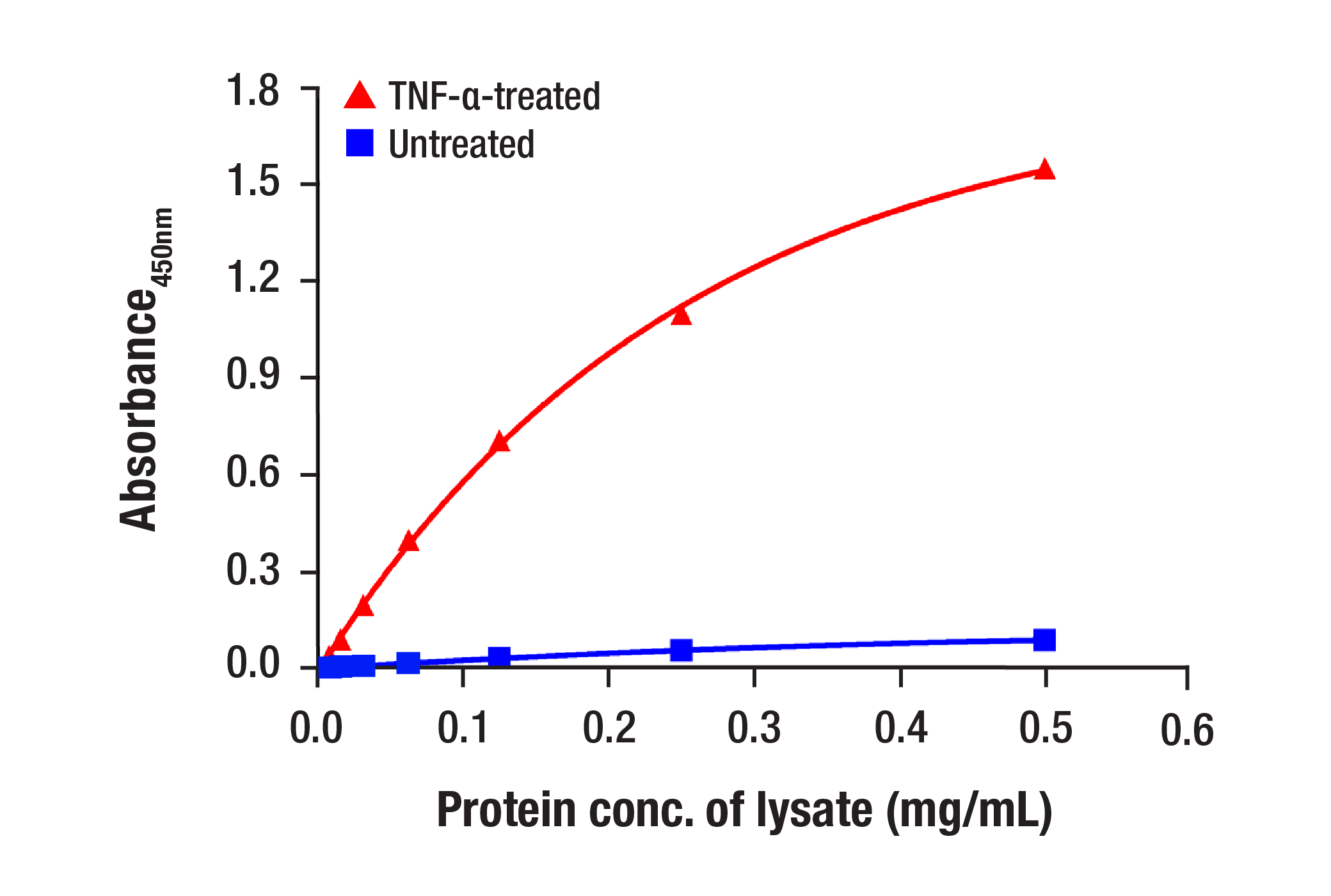 Sandwich ELISA performed using the Pan-branch Ubiquitin TUBE-UBQLN1 Assay Kit (Anti-Mouse IgG Secondary) #35030 with IkappaB alpha (L35A5) Mouse Monoclonal Antibody (Amino-terminal Antigen) (1 µg/mL) as a detection antibody. This paired sandwich ELISA was used to detect increased levels of ubiquitinated IkappaB alpha protein in TNF-alpha-treated HeLa cells. The relationship between lysate protein concentration from untreated and TNF-alpha-treated HeLa cells and the absorbance at 450 nm is shown. After serum starvation, HeLa cells were either left untreated or treated with TNF-alpha (10 ng/mL) for 5 minutes, and then lysed.
Explore TUBE kits from CST, along with ELISA-validated primary antibodies.
Matched Antibody Pairs: Building from a solid foundation
For teams ready to build their own sandwich immunoassays, the quality of antibody pair largely determines how reliable the assay’s performance will be. Poorly characterized pairs can introduce hidden specificity shifts, lot‑to‑lot drift, and matrix effects that may only become apparent once a program has already committed to a platform.
ELISA-validated Matched Antibody Pairs from CST are carefully optimized using the same ELISA‑based validation framework as PathScan and FastScan kits, so you start from a known, plate‑ready binding interaction rather than reagents that were only tested together without undergoing comprehensive validation. And, because CST capture and detection antibodies are also available as individual ELISA‑validated reagents, they provide a bridge between a de novo assay build and the broader ELISA-validated portfolio.
Assay Development Teams can begin with the recommended pair, then substitute detection formats (biotin, HRP, TR‑FRET donor, etc.) as the assay evolves to different platforms or multiplex panels without altering the underlying antibody–antigen binding specificity.
For example, phospho-Tau (Thr217) is a critical blood- and CSF-based biomarker for tracking amyloid and tau pathology progression in Alzheimer's disease research and drug development. Developing a Thr217-specific sandwich immunoassay requires capture and detection antibodies that can resolve this phospho-site without cross-reacting with unmodified tau or adjacent phospho-epitopes (Thr181, Thr231) present in disease-relevant matrices like CSF and plasma.
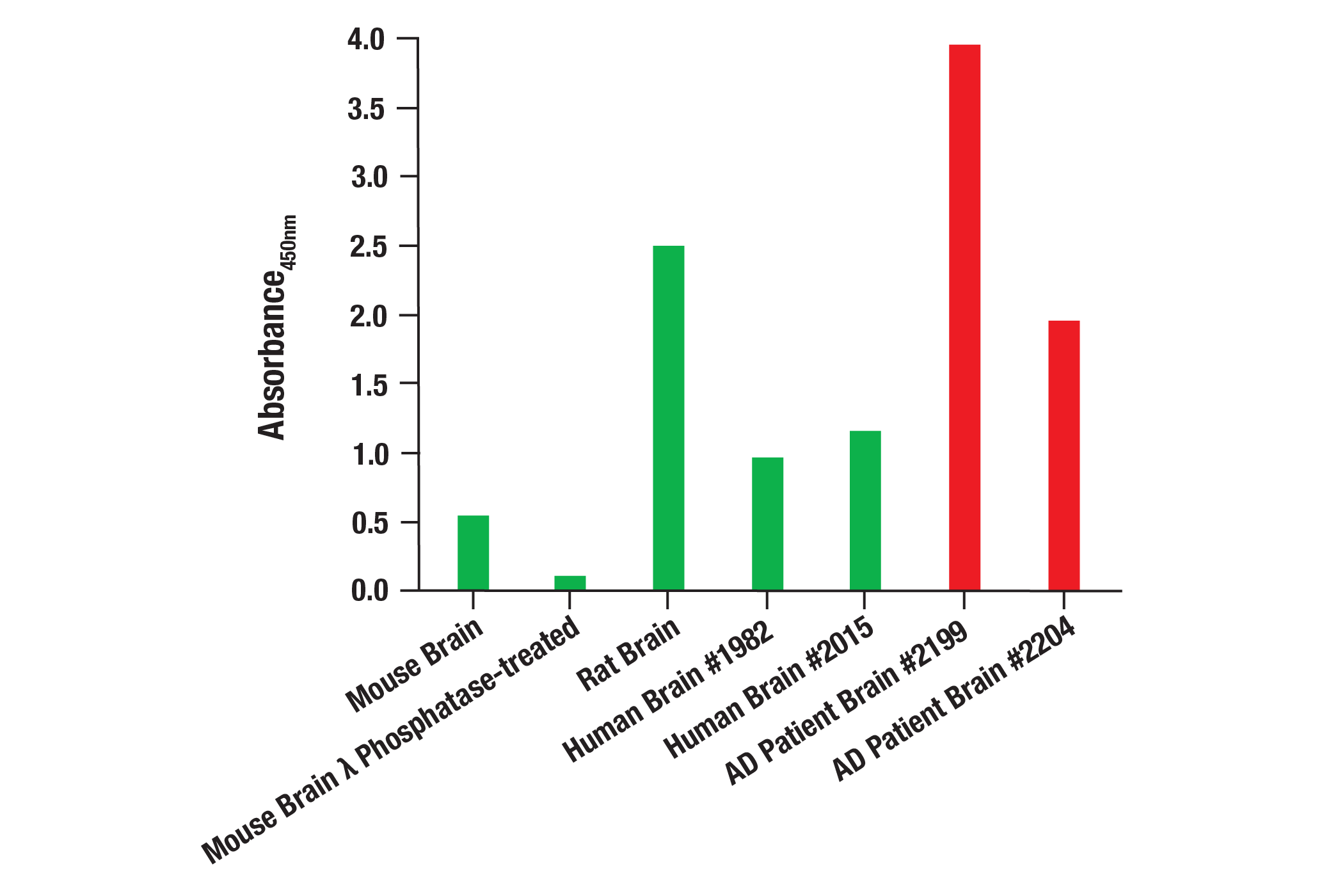
Data using Phospho-Tau (Thr217) Matched Antibody Pair #70933 are shown. The two antibodies function as a capture-target-detection sandwich (#79039 and #64265, respectively) to detect endogenous protein expression in various tissues.
The Phospho-Tau (Thr217) Matched Antibody Pair #70933 is a highly validated, sandwich immunoassay-ready combination that serves as a reliable foundation for biomarker quantification and early pharmacodynamic studies. As research needs evolve, these same antibody clones are also available in multiple formats. While different immunoassay platforms naturally produce distinct performance profiles, using the exact same clones across detection modalities ensures consistent epitope recognition, providing critical biological continuity and streamlining your optimization process as you transition to other platforms.
The capture and detection antibodies from the antibody matched pairs are also available as individual ELISA-validated antibodies, offering additional flexibility to integrate these reagents into existing assays or combine them with other reagents, while providing confidence in at least one side of the interaction.
Browse 370+ ELISA-validated Matched Antibody Pairs from CST or 550+ ELISA-validated antibodies from CST.
Ready-to-Ship Antibody Conjugates to Help Complete Your Assay
Assay development teams may require a specialized detection format for their platform of choice. CST fills these gaps with off-the-shelf, ELISA-ready antibodies conjugated with the label required by your platform, including:
- Biotinylated Antibodies formulated for use in MSD, AlphaLISA/AlphaScreen assays, and more
- Europium Antibody Conjugates to be used as TR-FRET Donors
- Alexa Fluor® 647 and APC Antibody Conjugates to be used as TR-FRET Acceptors
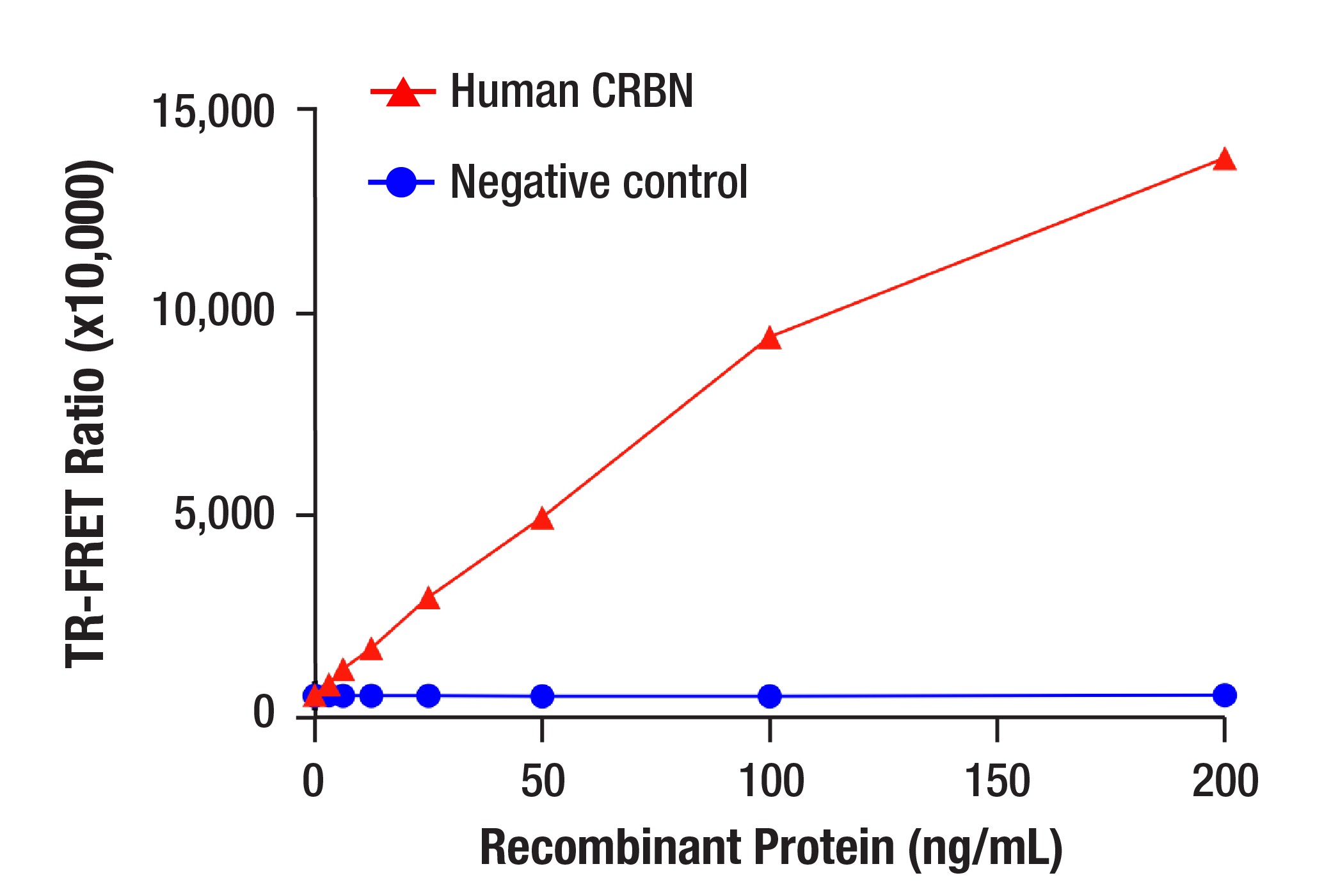
TR-FRET assay performed using CRBN (F4I7F) Rabbit mAb (trFluor™ Europium Cryptate Conjugate) #69544 and custom conjugate CRBN (D8H3S) Rabbit mAb (Alexa Fluor® 647 Conjugate) with titrations of human CRBN recombinant protein and a negative control. The relationship between the recombinant protein concentration and the TR-FRET ratio (665 nm/620 nm) is shown. The TR-FRET assay was run in a 384-well white plate and read on a BMG PHERAstar reader using laser excitation (337 nm) following a 2-hr incubation at room temperature.
Custom Services That Meet Your Research Needs
When off-the-shelf solutions aren't enough—whether you need to develop a new matched antibody pair to bypass a masked epitope, require a custom conjugate for your platform, or need specialized formulations to overcome a challenging matrix—CST custom services can build a tailored solution:
- Develop a Custom ELISA or Matched Antibody Pair: Our scientists can develop a new matched antibody pair or ELISA kit for your target of interest. We can also adapt existing assays to meet your specific assay requirements, such as converting them from colorimetric to chemiluminescent readouts or scaling them from 96-well to 384-well formats.
- Custom conjugate a CST ELISA-validated antibody or matched antibody pair to your label of choice.
- Prepare customized and carrier-free formulations of our recombinant monoclonal antibodies for your high-throughput ELISA/immunoassay platform.
And once the collaboration has yielded the optimal solution for your workflow, bulk orders and lot reservations are available to ensure availability during the lifetime of your project and eliminate potential supply issues in advance.
Ready to tailor these reagents to your platform? Reach out to learn more about custom conjugation and labeling services and other custom services offered by CST.
From First Hit to Go/No-Go Decision with ELISA, Toolbox, and Customized Reagents
Whether you need a ready‑to‑run kit, a matched pair to anchor a new assay, or carrier‑free formats to support the next platform change, the CST immunoassay toolbox is designed to move with your programs instead of holding them back.
“Immunoassay teams carry an enormous amount of responsibility for pipeline decisions,” concludes Estabrook. “Our job is to take as much reagent risk off their plate as we can, with antibodies and matched pairs that have already been tested for compatibility in ELISA and are available in the formats they’ll need next. Our immunoassay toolbox exists so they can focus on the biology and the decision, not on wondering whether the reagents will hold up.”
By building your sandwich immunoassays on a consistent set of well‑characterized reagents, you can spend less time firefighting lot changes and platform migrations, and more time answering the biological questions that matter.
Learn more about CST Solutions for Sandwich Immunoassay Development
26-ddc-65651
26-ict-51700
26-ICT--51700