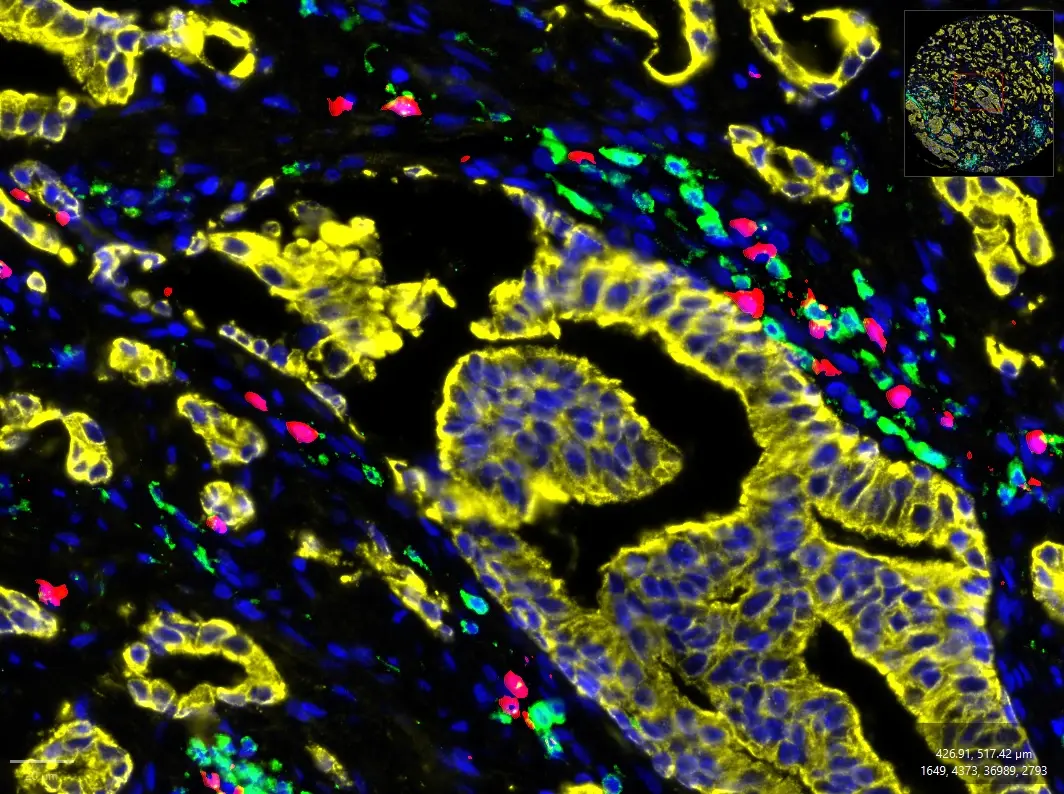




Few research problems are as invisible—or as potentially costly—as the antibody reagent sitting in your freezer.
You did everything right. You researched. You compared. You read the literature. You purchased a reagent from a supplier with one of the largest catalogs in the industry—over 100,000 antibodies!—because you were sure you’d be able to find exactly what you were looking for.
Many researchers see a large product catalog and assume it means more science—more targets covered, more data created, more in-house expertise. The reality, however, is often the opposite.
A large antibody catalog isn't built in a lab. It's built in a spreadsheet. And when it comes to selecting a well-characterized, highly specific reagent you can trust, a large antibody catalog can be the first warning sign of a supply chain transparency problem hiding in plain sight.
How the Antibody Supply Chain Actually Works
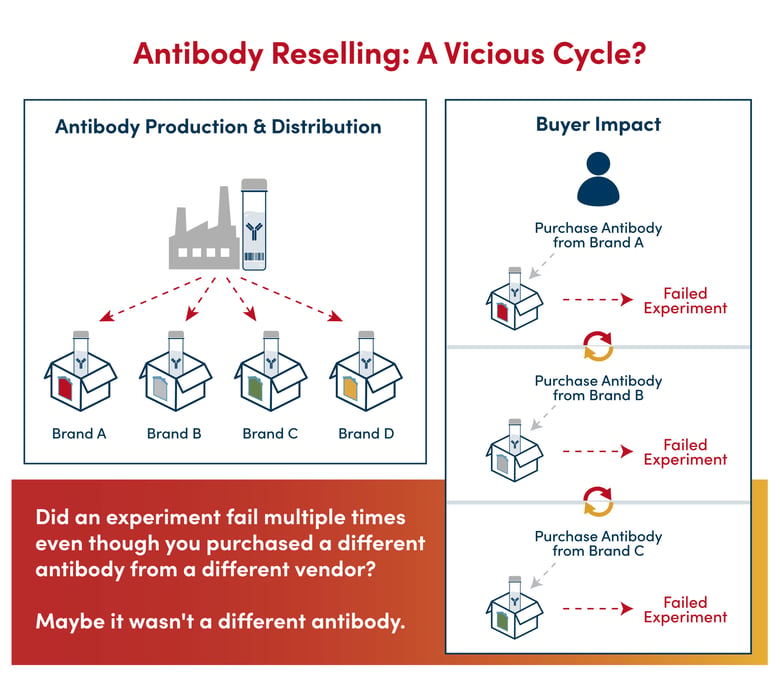
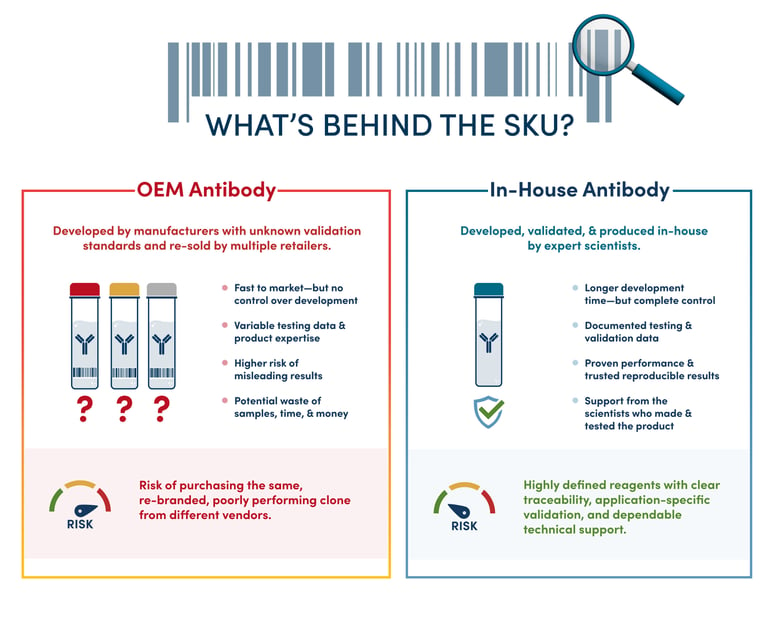
The reality is that many antibody suppliers with large catalogs don't manufacture many of the antibodies they sell. Instead, they source from a network of contract labs (Original Equipment Manufacturers, or OEMs), then apply their own label and resell the reagent—possibly with minimal or no additional validation. A single OEM lab may supply multiple competing companies with identical reagents, each sold under different names, with different catalog numbers, and at different price points.1
And here’s the concerning part: It’s often nearly impossible to tell whether you’re buying from the original manufacturer, a re-labeler, or some hybrid of both. Even a vendor's own website may not disclose the antibody’s origin.1,2
“If you’ve ever bought an antibody from supplier A, had it fail, purchased another reagent to the same target from supplier B, had it fail in the same way, then turned to Supplier C, only to have the same experience, there’s a real chance you just tested the same antibody clone under three different brand names,” says Seneca Stone, VP of Global Supply Chain at CST.
The risks of an outsourced manufacturing model are multi-fold. Supply chains change without notice. Suppliers get acquired, quality threshold standards shift, and products get discontinued. The frustrating part is that many scientists find this out the hard way—mid-experiment, after months of work. 3-5
And what scientists see—a SKU/product number, a product page, a datasheet—is only the surface. Beneath it lies the question that actually determines whether your experiment will succeed or fail: Who made this, to what standard was it tested, and will that still be true the next time I order?
The Reproducibility Crisis: Where Supply Chain Problems Become Scientific Problems
Poor antibody quality is one of the most well-documented contributors to what has been identified as a reproducibility crisis in scientific research.6,7 The financial toll alone is staggering: An estimated $350 million is wasted each year in the US on irreproducible results tied to poorly characterized antibodies.2 Expand that to preclinical research, and the figure reaches an estimated $28 billion lost annually to research that cannot be reproduced.6
An estimated $350 million is wasted annually in the US on irreproducible results tied to poorly characterized antibodies.2
Independent research initiatives continue to uncover antibodies that aren't appropriately validated—or those whose supporting product data doesn’t match actual performance. In a 2016 Nature survey of 1,576 scientists, more than half reported failing to reproduce their own experiments, and over 70% had failed to reproduce another group’s work.8
Based on testing data using knockout model cell lines, The Antibody Characterization through Open Science initiative (YCharOS) made the alarming discovery that as many as a third of commercially available antibodies for neuroscience-related proteins fail to perform as expected. Additionally, among 301 antibodies they tested and found in scientific literature figures, as many as 20–30% lack sufficient specificity to detect their intended target.9
In one high-profile case, a monoclonal antibody marketed as targeting the Bax protein was shown to bind non-specifically to a completely different protein—while also failing to detect Bax entirely. The antibody has been used in over 1,500 peer-reviewed articles, calling into question years of research across oncology, neurology, and cardiovascular disease.10 While some suppliers have begun the long process of cleaning their catalogs of poorly characterized reagents, this particular antibody is still available for purchase today—with no disclaimer regarding the confounding findings—and proudly boasts a 4.6/5 star review.12
"Every failed experiment that traces back to a bad antibody is a researcher's time wasted, a scientific community's trust put in question, and research dollars spent on a dead end,” says Roberto "Roby" Polakiewicz, PhD, Chief Scientific Officer at CST. “This is not a hypothetical. It’s happening right now in labs around the world."
The cost of a bad antibody isn't measured just in dollars. It's measured in careers chasing false leads, in trials designed on inaccurate preclinical data, and in the slow erosion of scientific trust.
What In-House Manufacturing Means: We Made It. We Stand Behind It.
The answer is straightforward: Invest in research antibodies that are manufactured in-house—where quality is ensured from start to finish.
At Cell Signaling Technology, over 99% of the recombinant antibodies we sell are made in our own labs, from clone to commercialization. So are over 95% of the products in our full catalog, which are developed, manufactured, and validated by our own scientists. If we approve an antibody for an application, users can be 100% certain we have validated its performance for that application.
This means that when you order a recombinant antibody from CST, there's over a 99% chance you're buying directly from the people who made your antibody. We stand behind our products with a robust antibody performance guarantee, and will share our raw testing and validation data with you, unmanipulated and unenhanced.
What "in-house" means to us:
-
Created, cloned, and characterized internally: Our antibody development scientists screen dozens to hundreds of clones against a single target before identifying the best candidate based on specificity, sensitivity, and application-specific performance, so the antibody's identity is known and documented from day one.
-
Recombinantly expressed with sequence-defined consistency: Over 99% of new CST antibodies are created using recombinant DNA technology, meaning they're made animal-free, which avoids hybridoma drift and ensures lot-to-lot consistency.
-
Validated on an application-specific basis: We validate our antibodies in the sample types and applications you're likely to use in your experimental protocols, and this genuine in-house data is prominently displayed on our website. So you can evaluate the performance before you place an order.
- Data integrity and transparency with unparalleled Tech Support: We test every product we make in our own hands and will gladly share the results and our unmanipulated performance data with you. Whenever you have a question or concern, our expert Tech Support team—with years of bench experience—is ready to share information and assist you.
“When a customer calls for technical support, they often end up speaking directly with the scientist who validated the antibody they're using,” says Heather Gudejko, Associate Director of Global Technical Support at CST. “The reaction is almost always the same: ‘Wait—you tested this yourself?’ For our customers, it’s completely unexpected. For us, it’s just the way we work."
We treat every validation campaign as its own research project and consider the target's biological context, expected expression levels, relevant disease models, and tissue types you’re likely to use. An antibody validated for western blotting is never assumed to work in IHC. One that works in IF is not assumed to work in flow cytometry. Each application is validated independently, because performance in one assay does not predict performance in another.
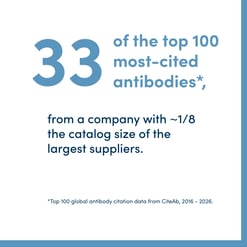
This is the operating philosophy behind a catalog of 13,500 products, not 100,000+. Every antibody earns its place in our catalog—or it doesn't ship. Every product reflects deliberate decisions—and a battery of testing data that we’ve produced in-house. The results speak for themselves.
 |
 |
 |
"We hear it time and time again: When a researcher needs an antibody they can trust, they turn to CST,” says Polakiewicz. “The reason is the effort we put into thoroughly validating our antibodies. We simply don't sell reagents we aren't 100% confident in. If you can find it from us, buy it from us."
Build Your Results on a Solid Foundation
You can't eliminate all the unreliable variables from your experiments. But you can choose not to introduce another one by carefully selecting your reagents.
When evaluating an antibody supplier, don't start with the catalog. Start with the questions a manufacturer should be able to answer without hesitation.
-
Did you manufacture this antibody, or did someone else?
-
Can you show me validation data for my specific application? For my tissue type?
-
What happens to this product if your supplier relationship changes?
-
How do you minimize lot-to-lot variability? Can you back this up with data?
At CST, we will gladly answer all of these questions and share the data we obtained ourselves.
A large catalog is easy to build through acquisition and re-labeling. A track record of publishable—and reproducible—results is not.
We didn't set out to build a catalog of over 100,000 products. We’ve carefully curated a portfolio of 13,500—and growing—that we're proud to put our name on.
Learn more about Product Performance & Validation at CST.
References
- Voskuil JL. Commercial antibodies and their validation. F1000Res. 2014;3:232. doi:10.12688/f1000research.4966.2
- Bradbury A, Plückthun A. Reproducibility: Standardize antibodies used in research. Nature. 2015;518(7537):27-29. doi:10.1038/518027a
- Browning M. The Antibody Two-Step Solution. F1000Res. 2015;4:810. Published 2015 Sep 15. doi:10.12688/f1000research.7055.2
- Kaur G, Bhatti K. Lot-to-lot variance in immunoassays — causes, consequences, and solutions. Clin Biochem. 2023;118:110592. doi:10.1016/j.clinbiochem.2023.110592
- Thompson S, Chesher D. Lot-to-Lot Variation. Clin Biochem Rev. 2018;39(2):51-60.
- Freedman LP, Cockburn IM, Simcoe TS. The Economics of Reproducibility in Preclinical Research. PLoS Biol. 2015;13(6):e1002165. doi:10.1371/journal.pbio.1002165.
- Baker M. Reproducibility crisis: Blame it on the antibodies. Nature. 2015;521(7552):274-276. doi:10.1038/521274a
- Baker M. 1,500 scientists lift the lid on reproducibility. Nature. 2016;533(7604):452–454. doi:10.1038/533452a
- Ayoubi R, Ryan J, Biddle MS, et al. Scaling of an antibody validation procedure enables quantification of antibody performance in major research applications. eLife. 2023;12:RP91645. doi:10.7554/eLife.91645
- Kahn RA, Virk H, Laflamme C, et al. Antibody characterization is critical to enhance reproducibility in biomedical research. Elife. 2024;13:e100211. Published 2024 Aug 14. doi:10.7554/eLife.100211
- Entrop K, Wieske S, Rehm M. Why Bax detection in >1400 publications might be flawed. Cell Death Dis. 2024;15(12):880. Published 2024 Dec 5. doi:10.1038/s41419-024-072
- Santa Cruz Biotechnology Inc. Bax Antibody (B-9): sc-7480.
https://www.scbt.com/p/bax-antibody-b-9. Published July 21, 2021.